Understanding Tarantula Lifespans
The captivating world of tarantulas often sparks curiosity, particularly regarding their longevity. Unlike many pets, tarantulas can live for a surprisingly long time, with their lifespans varying significantly based on several factors. Understanding these factors is crucial for any aspiring or current tarantula owner. The following sections delve into the key elements that influence how long a tarantula will grace us with its presence, offering insights into their fascinating lives. From species-specific differences to environmental influences, we’ll explore the secrets behind their extended lifespans.
Factors Influencing Tarantula Lifespan
Several aspects play a role in determining how long a tarantula thrives. Genetics, environment, and care all contribute to their overall health and lifespan. A well-cared-for tarantula, housed in a suitable environment, has a greater chance of reaching its full potential lifespan. Neglecting these factors, on the other hand, can lead to a shortened life. To truly appreciate these creatures, it’s essential to know the variables that shape their journey.
Species Differences

One of the most significant factors influencing lifespan is the tarantula species itself. Some species are naturally longer-lived than others. For example, certain New World tarantulas are known for their relatively long lifespans, often exceeding a decade or even two, while some Old World species have shorter lifespans. Researching the specific species you’re interested in is crucial to set realistic expectations.
Male vs. Female Lifespan
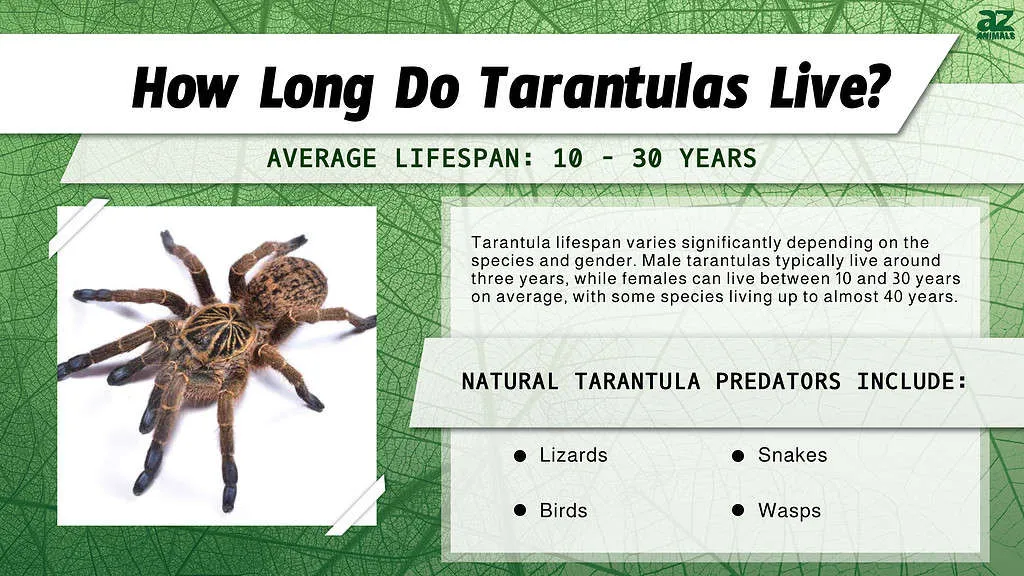
There’s a significant difference in lifespan between male and female tarantulas. Females generally live much longer than males. In many species, females can live for 10-30 years or more, while males typically only live for a few years after reaching maturity. This disparity is primarily due to the energy expenditure associated with mating for males, leading to a shorter lifespan.
Diet and Nutrition
A balanced diet is essential for a tarantula’s health and longevity. Providing a varied diet of appropriate-sized insects is key. Overfeeding can lead to health problems, and underfeeding can stunt growth and reduce lifespan. Understanding the nutritional needs of your specific tarantula species is crucial. Crickets, roaches, and mealworms often form the foundation of a tarantula’s diet, and supplements may sometimes be beneficial.
Impact of Enclosure and Environment

The environment in which a tarantula lives significantly impacts its lifespan. Maintaining proper conditions within the enclosure is critical for a healthy and long-lived tarantula. This includes factors like humidity, temperature, substrate, and space. The enclosure should mimic the tarantula’s natural habitat as closely as possible.
Humidity and Temperature
Humidity and temperature levels must be carefully managed to suit the tarantula’s species-specific needs. Incorrect humidity can lead to problems with molting, while extreme temperatures can be fatal. Research the ideal conditions for your tarantula species and use tools like hygrometers and thermometers to monitor and maintain the correct environment.
Substrate and Space
The substrate is the bedding material in the enclosure, and it provides a place for the tarantula to burrow and feel secure. The depth and type of substrate depend on the species. Adequate space is also important; a cramped enclosure can stress the tarantula and limit its activity. Providing a spacious enclosure allows the tarantula to behave naturally.
Common Health Issues and Lifespan

Tarantulas, like any animal, can experience health issues that can affect their lifespan. Recognizing and addressing these problems early is crucial. Knowing the signs of illness and the potential causes can make a significant difference in your pet’s health and longevity. Proper care and a good environment can prevent many common issues.
Moulting and its Effects
Moulting is the process by which a tarantula sheds its exoskeleton to grow. This is a vulnerable time, and improper environmental conditions or disturbances can lead to a failed molt, which can be fatal. Providing a safe and stable environment during molting is very important. The frequency of molting decreases as the tarantula ages.
Predators and Dangers
While tarantulas in captivity are safe from many predators, certain dangers exist. Parasites and diseases can affect their health. Additionally, improper handling can lead to injury. Taking precautions and creating a safe habitat is paramount to protect them. Always be mindful of any changes in behavior or appearance, and consult a veterinarian experienced with arachnids if you suspect a problem.
Maximizing Your Tarantula’s Longevity

As a tarantula owner, you have a direct impact on how long your pet lives. By understanding the factors affecting lifespan and taking proactive steps, you can significantly enhance their quality of life and potentially extend their lifespan. From creating the perfect habitat to recognizing and addressing health issues, your actions contribute to your tarantula’s overall well-being.
Providing the Right Habitat
The foundation of a long, healthy life for your tarantula starts with its habitat. Research the specific requirements for your species. The enclosure should be appropriately sized, with proper ventilation, substrate, and hiding places. Maintain the correct temperature and humidity levels. A well-designed enclosure provides a secure, comfortable environment and minimizes stress. This is fundamental to their health and well-being.
Feeding and Watering
Provide a balanced diet of appropriately sized insects and fresh, clean water at all times. Avoid overfeeding, which can lead to health issues. Research the recommended feeding schedule for your species and adjust it based on your tarantula’s size and activity level. Always remove uneaten food to prevent the build-up of mold and bacteria, which could be harmful to your pet. Regular water changes are equally critical.
Handling and Stress

While tarantulas are fascinating creatures, excessive handling should be avoided, as it can cause stress. When handling is necessary, do so carefully and gently. Avoid sudden movements or loud noises, as these can frighten the tarantula. Observe your tarantula’s behavior and body language. If your tarantula seems stressed or defensive, it’s best to leave it alone. A low-stress environment contributes to overall health and longevity.
The Longest-Lived Tarantulas
Certain species are known for their remarkable longevity. These tarantulas can live for several decades, offering a unique opportunity to share a significant portion of your life with these fascinating creatures. Researching these long-lived species can be a rewarding aspect of tarantula ownership, providing you with a long-term companion. Some examples include certain species of Grammostola and Brachypelma.
Tips for Tarantula Owners
Owning a tarantula is a rewarding experience. Researching the specific needs of your chosen species is fundamental. Monitor your tarantula regularly for signs of illness, and consult with a veterinarian experienced in arachnids. Keep the enclosure clean and the environment stable. Be patient and observe the animal, and you’ll enjoy the experience. With proper care, you can have many years of enjoyment with your tarantula.