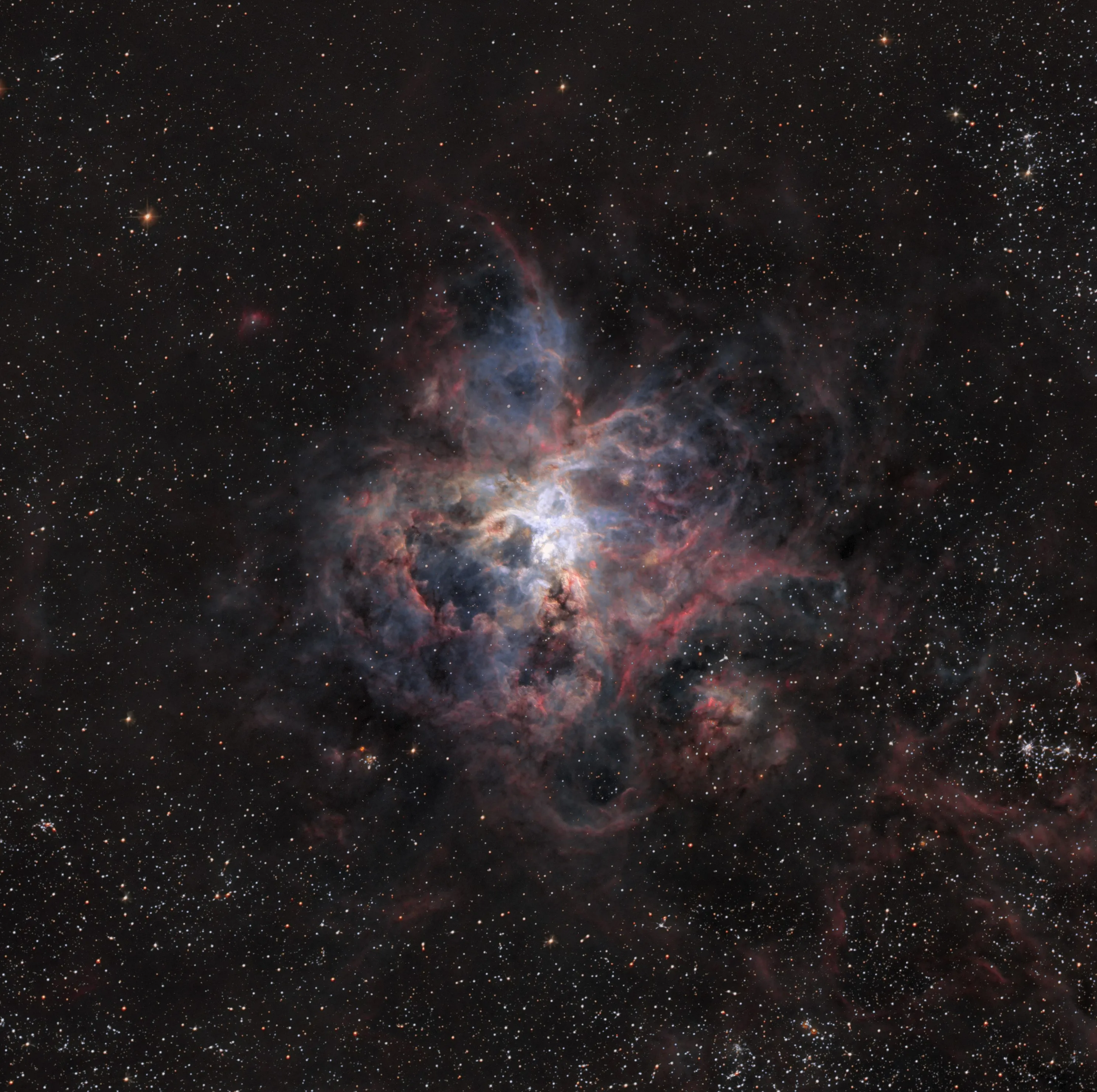
What is the Nebula Tarantula?
The Tarantula Nebula, also known as 30 Doradus, is an enormous star-forming region located in the Large Magellanic Cloud (LMC), a satellite galaxy of the Milky Way. Its vibrant colors and intricate structures make it a favorite target for astronomers and astrophotographers alike. The nebula’s name is derived from its spider-like appearance in early telescopic images, giving rise to the moniker “Tarantula”. This vast cosmic cloud is a bustling hub of stellar activity, harboring some of the most massive and luminous stars known to exist. It is a remarkable example of star formation and a stunning visual treat for anyone interested in the wonders of space. The nebula’s sheer size and energetic processes make it an invaluable subject for studying the life cycles of stars and galaxies.
Where is the Nebula Tarantula Located?
The Tarantula Nebula resides within the Large Magellanic Cloud (LMC), one of the closest galaxies to our own Milky Way. The LMC is approximately 160,000 light-years away and is easily visible from the Southern Hemisphere. This distant location, however, doesn’t diminish the nebula’s spectacular appearance; in fact, it is one of the most active star-forming regions in the Local Group of galaxies. Because of its relative proximity, astronomers can study the Tarantula Nebula in great detail, gaining valuable insights into the processes of star formation and the evolution of galaxies. Its placement in the LMC offers a unique perspective for studying the interaction between stars, gas, and dust in a galactic environment.
The Nebula Tarantula’s Star Formation

The Tarantula Nebula is a hotbed of star formation, where new stars are constantly being born from collapsing clouds of gas and dust. The heart of the nebula, known as R136, is home to a massive cluster of young, hot, and extremely luminous stars. These massive stars emit intense radiation and powerful stellar winds that sculpt the surrounding gas and dust, creating the complex structures observed within the nebula. These stars are significantly more massive than our sun and live relatively short lives, exploding as supernovae. The ongoing star formation makes the Tarantula Nebula a dynamic and evolving system, providing a perfect laboratory for understanding stellar birth and evolution. The nebula’s high concentration of young stars allows astronomers to study stellar processes in their early stages of development.
The Tarantula Nebula’s Stellar Population
The Tarantula Nebula hosts an extraordinary population of stars, including some of the most massive and luminous stars ever observed. The central cluster, R136, is composed of hundreds of massive stars, some of which are over a hundred times more massive than our sun. These stars generate tremendous amounts of energy, emitting intense ultraviolet radiation that ionizes the surrounding hydrogen gas, causing it to glow. The presence of these massive stars also leads to a high rate of supernovae. The nebula provides a unique opportunity to study the properties of massive stars and their impact on their surroundings. Studying the stellar population allows us to understand the evolution of stars and the feedback processes that affect star formation in galaxies.
The Nebula Tarantula’s Size and Distance
The sheer scale of the Tarantula Nebula is astounding. Its vast size and distance from Earth provide a spectacular view for astronomers. Understanding its dimensions and location is key to appreciating its significance in the cosmos. Its properties offer valuable context for the study of star formation and galaxy evolution.
Size of the Tarantula Nebula

The Tarantula Nebula is remarkably large, spanning approximately 1,000 light-years across. This immense size makes it one of the largest and most active star-forming regions in the Local Group of galaxies. To put this into perspective, if the Tarantula Nebula were as close to us as the Orion Nebula, it would dominate our night sky. The nebula’s enormous size indicates the immense amount of gas and dust involved in star formation, and its scale allows us to study stellar processes on a grand scale. Its extensive features and intricate structures showcase the dramatic effects of stellar winds and radiation on the surrounding interstellar medium.
Distance from Earth
The Tarantula Nebula is located about 160,000 light-years away in the Large Magellanic Cloud. Despite this great distance, the nebula is still visible to the naked eye under dark-sky conditions. Its relative proximity compared to other galaxies allows for detailed observations and studies. The distance is crucial for understanding its true size and the energy it emits. Knowing the distance allows astronomers to calculate the intrinsic luminosity of the stars and the total energy output of the nebula. This information is essential for modeling and understanding the processes occurring within the nebula.
Nebula Tarantula’s Supernova Activity
The Tarantula Nebula is a site of frequent supernova events due to its high concentration of massive stars. These stellar explosions contribute to the nebula’s dynamic and evolving nature, enriching the interstellar medium with heavy elements. The observation of supernovae in this nebula offers valuable insights into the life cycles of massive stars and the processes that trigger these dramatic events. They are also crucial in distributing heavy elements throughout the cosmos.
Supernova Remnants

The Tarantula Nebula hosts numerous supernova remnants, which are the expanding shells of gas and debris left behind after a massive star explodes. These remnants are incredibly hot and energetic, emitting radiation across the electromagnetic spectrum. The study of supernova remnants within the Tarantula Nebula provides information about the physical conditions of these explosions and the processes that redistribute heavy elements into space. Studying supernova remnants helps astronomers understand the end stages of massive stars and their impact on the surrounding environment.
Notable Supernova Events
One of the most famous supernova events in the Tarantula Nebula was Supernova 1987A, which was the closest supernova observed since the invention of the telescope. This event offered astronomers a unique opportunity to study the details of a stellar explosion and its aftermath, providing crucial data for understanding the life cycles of massive stars. Supernova 1987A remains a subject of intense study. The detailed observations of this supernova have significantly advanced our understanding of stellar evolution and the processes of supernovae. The ongoing study of SN 1987A and other supernova remnants in the Tarantula Nebula continues to provide valuable data.
The Nebula Tarantula’s Observational Significance
The Tarantula Nebula is a valuable object for astronomical research due to its proximity, active star formation, and the presence of massive stars. It offers a unique opportunity to study the processes of star formation, stellar evolution, and the interaction between stars and their environment. Its observational significance extends to both professional astronomers and amateur observers alike. The nebula provides a rich field of study. This rich region provides a wealth of data.
Best Time to Observe

The Tarantula Nebula is best observed from the Southern Hemisphere, where it appears high in the night sky. The best time to observe is during the Southern Hemisphere’s winter months, from June to August, when the LMC and the Tarantula Nebula are prominent. Due to its high declination, observers in the Southern Hemisphere have the best viewing conditions. With a telescope or even a good pair of binoculars, the nebula is visible under dark skies.
How to Find It
Finding the Tarantula Nebula can be an exciting challenge. The easiest way is to locate the Large Magellanic Cloud, which appears as a fuzzy patch in the night sky. The Tarantula Nebula is located within the LMC, making it relatively easy to spot once you have found the galaxy. Using a telescope or binoculars will enhance your viewing experience, revealing the intricate details of the nebula. It is important to have a dark sky. Using star charts and astronomy apps can aid in identifying the LMC and the Tarantula Nebula. Enjoy your journey through the cosmos!