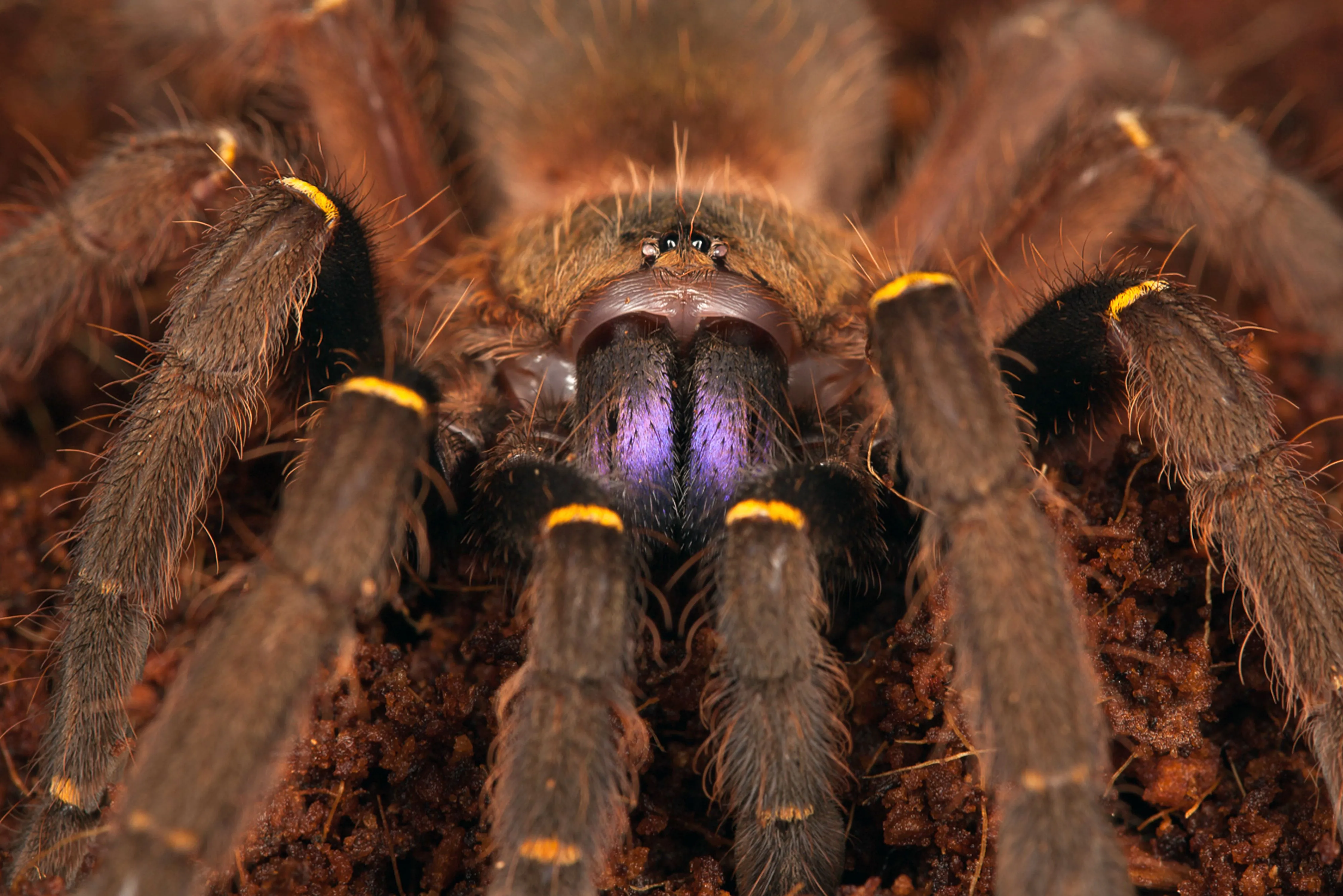
What are Pedipalps?
Pedipalps are a fascinating and essential feature of tarantulas, playing multiple roles in their survival and daily lives. Often mistaken for an extra set of legs, they are actually appendages located near the mouth, just below the chelicerae (the fangs). These structures are crucial for various functions, from sensing the environment to manipulating food and, in males, assisting in reproduction. Unlike legs, pedipalps have a distinct structure and serve different purposes, making them a key identifier and functional component of these amazing arachnids. The evolution of pedipalps has allowed tarantulas to thrive in various environments, contributing to their success as predators.
Location of Pedipalps
Understanding the precise location of pedipalps is crucial for identifying them. Positioned just below and slightly forward of the tarantula’s first pair of legs, the pedipalps extend outwards from the cephalothorax, the combined head and chest region. They are directly adjacent to the mouth and chelicerae, where the fangs are located, allowing for easy access to food and facilitating various sensory functions. Their positioning allows for a wide range of motion and manipulation of objects, enhancing the tarantula’s ability to navigate and interact with its surroundings. This specific placement is consistent across all tarantula species, making it a fundamental characteristic of these arachnids.
Functions of Pedipalps

Pedipalps serve several vital functions in the life of a tarantula. Primarily, they act as sensory organs, filled with sensitive hairs and sensory receptors that help the tarantula detect vibrations, chemicals, and other environmental stimuli. This sensory input is essential for navigation, prey detection, and avoiding predators. Additionally, pedipalps assist in feeding, helping to manipulate food and bring it closer to the mouth. They also play a role in defense, sometimes being used to ward off threats. In males, the pedipalps are modified for reproduction, used to transfer sperm to the female during mating. All these functions make the pedipalps a versatile and indispensable tool for the tarantula’s survival.
Pedipalps and Sensory Perception
One of the primary functions of pedipalps is their role in sensory perception. They are covered with a dense array of sensory hairs and sensory organs, which act like tiny antennae. These receptors allow tarantulas to detect a wide range of stimuli, including vibrations in the ground, air currents, and even chemical signals. This heightened sensory capability is essential for locating prey, as tarantulas can sense the slightest movements of potential meals. It also aids in avoiding predators and navigating complex environments. Their sophisticated sensory abilities are critical to a tarantula’s survival in diverse habitats, allowing them to react swiftly to both threats and opportunities.
Pedipalps and Feeding
Pedipalps play a crucial role in the feeding process for tarantulas. They are used to manipulate and handle food items, bringing them close to the chelicerae for the tarantula to begin feeding. After the tarantula captures its prey, the pedipalps help position the food for the fangs to inject venom. Once the prey is subdued, the pedipalps assist in tearing the food and helping the tarantula break it down into smaller, manageable pieces. This precise manipulation ensures the tarantula can consume its meal effectively. They also help clean and groom the mouthparts, ensuring proper functioning. Without the assistance of the pedipalps, tarantulas would struggle to capture and consume their prey.
Pedipalps and Mating

During mating, pedipalps have a special role in male tarantulas. The tips of the male’s pedipalps are modified into specialized structures called palpal bulbs, which store the sperm. Before mating, the male will often create a sperm web, where he deposits his sperm. He then dips his pedipalps into the sperm and fills the bulbs. During the mating process, the male uses his pedipalps to transfer the sperm to the female’s epigastric furrow, where fertilization takes place. The shape and size of the palpal bulbs are essential for species identification, as they vary widely between different tarantula species. This complex process is crucial for the tarantula’s reproduction and continuation of its species.
Male vs Female Pedipalps
One of the easiest ways to determine the sex of a tarantula is to examine its pedipalps. Mature male tarantulas have modified pedipalps, with palpal bulbs at the tips. These bulbs are used for storing and transferring sperm, as described earlier. Female tarantulas, on the other hand, lack these palpal bulbs; their pedipalps are typically smaller and do not have the same bulbous structures. The presence or absence of the palpal bulbs provides a clear and reliable visual difference between the sexes, aiding in the identification process. Although it may require some experience to differentiate, this is one of the most used methods for sexing tarantulas.
Pedipalps and Molting
Like the rest of the tarantula’s exoskeleton, pedipalps are shed during molting. As the tarantula grows, it must periodically shed its outer layer to accommodate its increasing size. The pedipalps, along with all other body parts, are enclosed within the old exoskeleton and replaced with a new, larger version. During the molting process, the tarantula is especially vulnerable, as it is soft and defenseless. The newly formed pedipalps are initially soft but harden over time, becoming fully functional after the molting is complete. Molting is a critical and ongoing process for the tarantula, and the pedipalps are an integral part of this cycle of growth and renewal.
Pedipalps and Defense

Pedipalps play a role in the defense mechanisms of tarantulas. Though not the primary means of defense, pedipalps can be used to fend off threats. If a tarantula feels threatened, it may raise its pedipalps along with its fangs as a warning. In some cases, the pedipalps can also be used to bat at attackers or to help the tarantula position itself for a defensive strike. They are not as effective as the chelicerae or the urticating hairs on the abdomen, but they contribute to the overall defensive posture of the tarantula. The tarantula’s defensive strategies are varied and depend on the species and the perceived threat.
Pedipalps and Habitat
The importance of pedipalps extends to the tarantula’s habitat. The functionality of pedipalps allows tarantulas to thrive in various environments. Their sensory capabilities permit them to navigate complex terrain and detect potential dangers or food sources. The ability to manipulate and handle food ensures that they can successfully consume whatever prey is available in their ecosystem. The tarantula’s pedipalps and how they function contribute to their ability to survive in diverse habitats from rainforests to deserts, and grasslands. Because of their amazing pedipalps, tarantulas have successfully adapted and thrived in a variety of environments around the world.
How to Care for a Tarantula and their Pedipalps
Caring for a tarantula involves understanding and protecting its vital features, including its pedipalps. Ensuring the tarantula’s habitat is safe and free of hazards is critical to preserving the integrity of the pedipalps. Avoid using sharp objects near the tarantula. When cleaning the enclosure, do so gently, as the pedipalps can be easily damaged. Provide the appropriate temperature, humidity and diet, to ensure that the tarantula thrives and molts successfully, enabling its pedipalps to regenerate. If you handle a tarantula, do so with extreme care and avoid any actions that might cause stress or injury to any of the limbs, including the pedipalps. Careful and knowledgeable care is essential to the health and well-being of your tarantula and its extraordinary pedipalps.