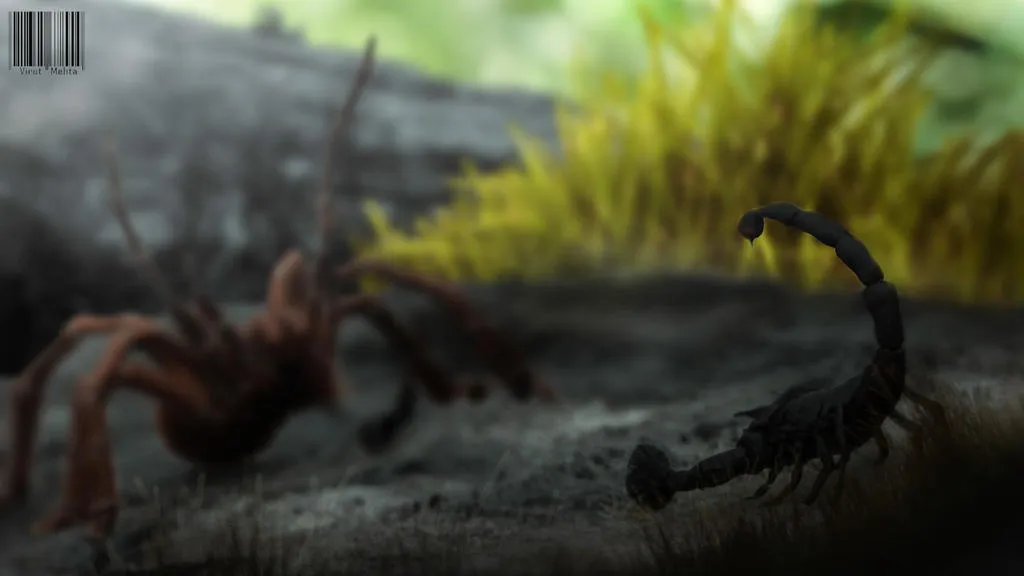
The natural world is filled with incredible battles, and few are as captivating (or intimidating) as the potential clash between a scorpion and a tarantula. These formidable arachnids, both feared and respected, represent some of nature’s most successful predators. But what would happen if they were to meet in a fight? This article explores the key aspects of these creatures, comparing their strengths, weaknesses, and survival strategies, to give you a comprehensive understanding of what makes each tick. Let’s delve into the fascinating world of scorpions and tarantulas and see what sets them apart. This isn’t just a simple comparison; it’s an exploration of survival, adaptation, and the raw power of the wild.
The Scorpion’s Arsenal
Scorpions are ancient predators, having roamed the Earth for over 400 million years. Their survival is a testament to their effective weaponry and adaptations. The scorpion’s arsenal is a combination of physical attributes and potent venom, designed to subdue prey and defend against threats. These elements, finely tuned by evolution, make the scorpion a formidable opponent in any encounter. Understanding these tools is crucial for appreciating the scorpion’s survival tactics and how it might fare in a battle against a tarantula.
Venom and Sting Mechanism
The most recognized weapon of the scorpion is its venom-injecting stinger located at the end of its segmented tail. This stinger delivers a powerful neurotoxin designed to paralyze or kill prey. The venom’s potency varies greatly between species, ranging from relatively mild to potentially lethal to humans. The scorpion can control the amount of venom injected, conserving it when necessary. This is an important factor in how the scorpion will hunt or defend itself and makes it a strategic element during a fight. The swiftness and precision of the sting are also critical to the scorpion’s success.
Claws and Physical Attributes

Scorpions possess large, powerful pincers, called pedipalps, used for grabbing and crushing prey. These claws can exert significant force, allowing scorpions to subdue larger insects and even small vertebrates. The exoskeleton provides robust protection against the environment and potential attacks, adding to their resilience. Their segmented bodies offer flexibility and mobility, enabling them to navigate various terrains. Size also plays a critical role, with some scorpion species growing to considerable lengths, boosting their strength and defensive capabilities. See the image of scorpion claws for a clearer image.
Hunting Strategies
Scorpions are primarily ambush predators, often waiting in the shadows to surprise their prey. They detect vibrations in the ground, using sensory hairs on their legs to identify the movement of potential meals. Scorpions typically hunt at night, taking advantage of the darkness to avoid detection by potential predators. Their hunting strategies may vary depending on the species and environment. The ability to move quickly, use their claws to restrain prey, and inject venom quickly is a complex set of factors that makes the scorpion a very effective hunter. They are well-adapted to catching their prey as shown on image of scorpion hunting.
Tarantula’s Defenses and Offenses
Tarantulas, with their large size and hairy bodies, are equally impressive predators. Their survival strategies differ significantly from those of scorpions, relying on a combination of physical attributes, venom, and unique defensive mechanisms. The tarantula’s array of weapons and tactics, honed over millions of years, are specially designed for both offense and defense. Understanding the capabilities of a tarantula is essential when considering a potential encounter against a scorpion.
Venom and Fangs

Tarantulas possess large fangs that they use to inject venom into their prey. Their venom is primarily designed to immobilize and begin the process of breaking down the tissues of their prey, so they can consume them. While tarantula venom is generally not lethal to humans, it can cause significant discomfort, including pain and swelling. The size and sharpness of their fangs are also crucial, enabling them to pierce the exoskeletons of insects and other potential meals. The venom and fangs are the tarantula’s primary offensive weapons.
Size and Physical Prowess
Tarantulas are known for their impressive size, with some species having leg spans exceeding 10 inches. Their large size gives them a considerable advantage in physical combat and the ability to overpower smaller opponents. They possess robust bodies covered in sensory hairs, which provide information about their surroundings. Their strong legs are designed for climbing and burrowing, enabling them to navigate diverse terrains and create a home. Their size and strength are crucial factors in their hunting and defensive capabilities, playing a significant role in any encounter with a scorpion.
Webs and Hunting Tactics
While not all tarantulas create webs to catch prey, many use silk to line their burrows and create trip lines to sense the approach of potential meals. Tarantulas are ambush predators, waiting patiently for prey to come within striking distance. When an insect or small animal gets too close, the tarantula will quickly pounce, using its fangs to deliver venom. Some tarantulas also flick urticating hairs from their abdomens, a defensive measure designed to irritate predators. This combination of ambush tactics, webbing, and defensive hairs makes them extremely efficient hunters. The image of tarantula web is shown here.
Habitat and Environment

The environments where scorpions and tarantulas live significantly influence their behaviors, survival strategies, and interactions with other species. Understanding their respective habitats provides crucial insight into how they have evolved to survive and the resources they compete for. Analyzing habitat provides an understanding of where these creatures may encounter one another and the environmental conditions that could impact a fight.
Scorpion Habitats
Scorpions are found in a variety of habitats worldwide, from deserts and grasslands to tropical rainforests. They are often found under rocks, logs, or in burrows during the day, emerging at night to hunt. Their ability to survive in harsh environments demonstrates their resilience, with some species able to withstand extreme temperatures and limited resources. The specific habitat will influence the type of prey scorpions encounter and the strategies they must adopt to survive. The image of scorpion habitat shows you how they look.
Tarantula Habitats
Tarantulas also exhibit a diverse range of habitats, from arid deserts to humid rainforests. Depending on the species, they may be found living in burrows, under rocks, or in trees. Their habitat preferences are linked to their specific needs, including temperature, humidity, and food availability. Like scorpions, tarantulas have adapted to survive in diverse environments, and their habitat provides clues to understanding their potential interactions with other species, including scorpions. Refer to the image of tarantula habitat for better understanding.
The Clash & The Fight

The potential encounter between a scorpion and a tarantula is a battle of survival where various factors come into play. From size and strength to agility and venom potency, each attribute can tip the scales in either creature’s favor. Evaluating these aspects provides a framework for understanding which might be more likely to win. Considering the potential factors allows for a better understanding of the outcome of a confrontation.
Size and Strength Comparison
Generally, tarantulas tend to be larger and more robust than most scorpion species, giving them an advantage in terms of physical strength. However, the strength of a scorpion’s claws cannot be overlooked, and can prove to be a game-changer if the scorpion manages to get a grip. The outcome may depend on the specific species involved and the relative size of each animal. The larger the size and strength, the more advantage will one of the animals have. See the image for understanding better.
Agility and Speed
Scorpions are known for their quick reflexes and the ability to strike with lightning speed. Their agility could allow them to dodge the tarantula’s attacks and get in a sting, which could be devastating. Tarantulas, although generally slower, can still move swiftly when attacking. The agility and speed would be a significant advantage, allowing either creature to land the first blow. See the image for comparison.
Venom Potency Comparison

The potency of the venom is a deciding factor, as a sting from a highly venomous scorpion could quickly paralyze or kill a tarantula. The venom of the tarantula, although potent, may not be as dangerous to the scorpion, depending on the species. The overall outcome will largely depend on the specifics of the venom and the impact it has on the opponent. This is usually the turning point of the fight.
The fight between a scorpion and a tarantula is never a clear-cut result. The specific species, individual sizes, and the environment all play key roles. While tarantulas often have the advantage in size and strength, the speed and venom of the scorpion could make a difference. In the end, the outcome of a battle between these two arachnids underscores the delicate balance of nature, survival of the fittest, and the raw power found in the wild.