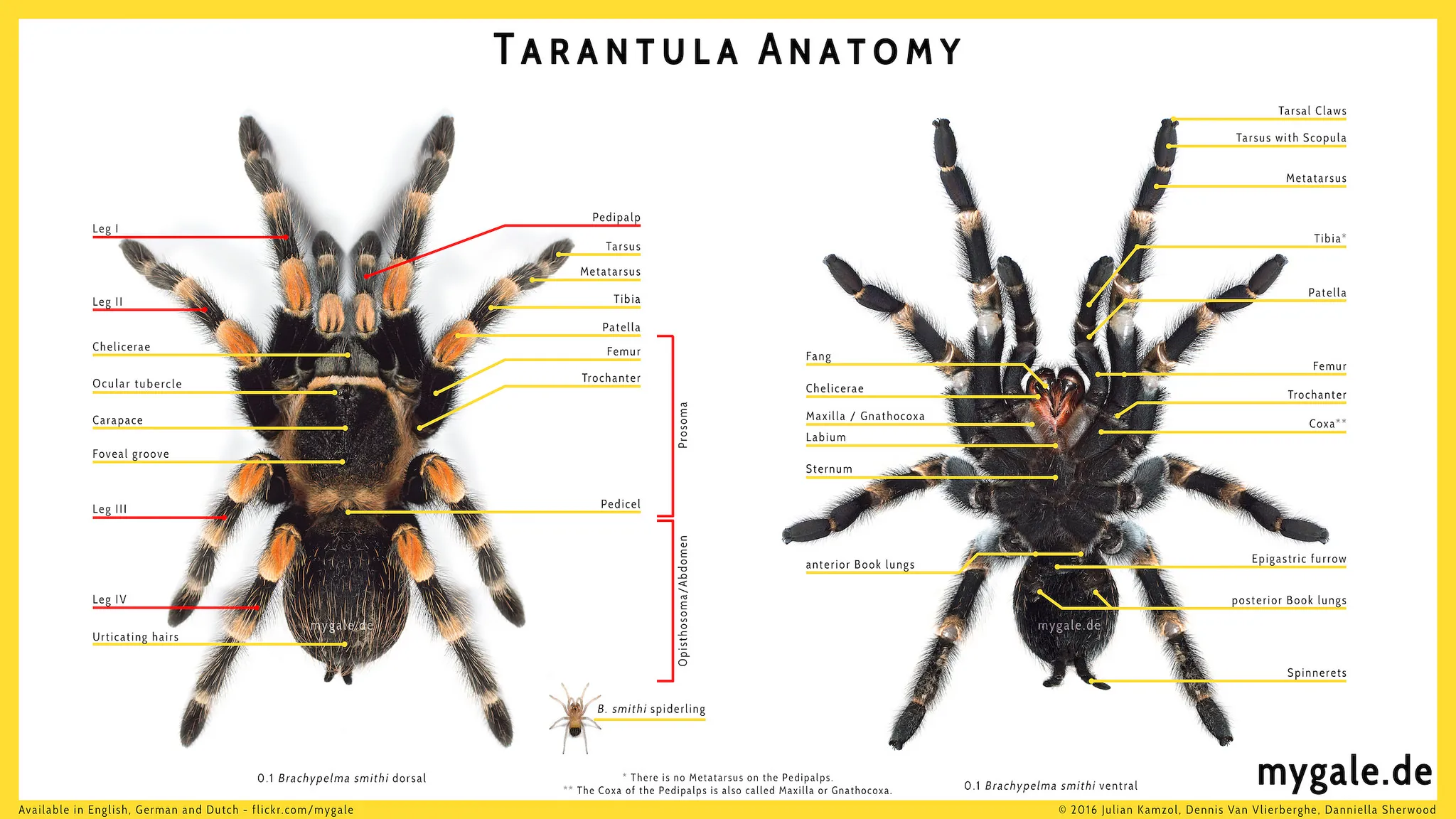
The Exoskeleton
The exoskeleton is the tough, external covering of a tarantula’s body, serving as both a protective shield and a structural support. This rigid armor is made of chitin, a complex carbohydrate. Unlike the soft, flexible skin of humans, the exoskeleton provides a robust defense against predators and environmental hazards. The exoskeleton also plays a crucial role in water retention, preventing the tarantula from drying out in its arid environment. However, the exoskeleton doesn’t grow; therefore, tarantulas must shed it periodically in a process called molting. During molting, the tarantula creates a new, larger exoskeleton beneath the old one, allowing it to grow. The old exoskeleton splits open, and the tarantula emerges, soft and vulnerable, until the new one hardens. This makes tarantulas especially susceptible to harm during this period.
Cephalothorax The Body’s Command Center
The cephalothorax, also known as the prosoma, is the fused head and thorax region of the tarantula. It is the central hub where many vital functions occur. The cephalothorax houses the tarantula’s brain, eyes, mouthparts, and the attachment points for the legs. The size and shape of the cephalothorax can vary slightly depending on the tarantula species, but it generally appears as a solid, shield-like structure. The cephalothorax’s tough exoskeleton protects the internal organs and nervous system from damage. Inside the cephalothorax, the tarantula’s organs are arranged in a compact manner, optimized for efficient function. The cephalothorax is crucial for movement, sensing the environment, and processing information, essentially serving as the control center for the tarantula.
Eyesight

Tarantulas generally have eight eyes, arranged in two rows on the cephalothorax, although the exact arrangement can vary between species. Despite having multiple eyes, tarantulas don’t have exceptionally sharp vision. Their eyesight is primarily used to detect movement, shadows, and changes in light intensity, rather than for detailed image formation. The eyes are particularly sensitive to motion, which is crucial for detecting prey or potential threats. Some species also have specialized eyes that may aid in night vision or detecting specific wavelengths of light. The placement of the eyes allows the tarantula to scan its surroundings in almost a 360-degree view, helping it to perceive potential threats and locate potential prey. While their eyesight isn’t their primary sensory tool, it is an important component of the tarantula’s sensory toolkit.
Chelicerae and Fangs
The chelicerae are a pair of appendages located in front of the tarantula’s mouth, used for grasping and manipulating food. Each chelicera ends with a sharp fang, which the tarantula uses to inject venom into its prey. The fangs are connected to venom glands located within the chelicerae. The size and shape of the fangs can vary significantly between species, correlating with the type of prey they typically consume. When the tarantula bites, it uses its chelicerae to grip the prey firmly while injecting venom. The venom serves both to paralyze the prey and to begin the process of breaking down its tissues, making it easier for the tarantula to consume its meal. The chelicerae and fangs are essential for feeding, defense, and, in some cases, even digging. Their effectiveness is critical to the tarantula’s survival and predatory success.
Pedipalps
Pedipalps are another pair of appendages, located near the chelicerae, which serve multiple functions. These leg-like structures are used for manipulating food, sensing the environment, and in males, for mating. The pedipalps are covered in sensory hairs that help the tarantula feel vibrations, textures, and changes in air currents. Male tarantulas have specialized pedipalps called palpal bulbs, which are used to transfer sperm to the female during mating. The pedipalps of female tarantulas are generally similar in appearance to their legs. The pedipalps are very important for the overall survival of the tarantula. They also help the tarantula to navigate its environment and detect changes, such as prey or threats. The pedipalps are, therefore, an integral part of the tarantula’s sensory and reproductive systems, making them indispensable to the tarantula’s lifestyle.
The Abdomen

The abdomen is the soft, flexible rear section of the tarantula’s body. It houses the digestive system, the heart, the reproductive organs, and the spinnerets. The abdomen is connected to the cephalothorax by a narrow pedicel, which allows for movement and flexibility. The abdomen expands significantly after a large meal, as the tarantula digests its prey. The color and patterns on the abdomen can vary greatly between species, offering camouflage or aiding in mating displays. The abdomen also contains the book lungs, which are used for respiration. The exoskeleton of the abdomen is less rigid than that of the cephalothorax, allowing it to expand and contract. The abdomen is the center for critical bodily functions such as digestion, respiration, and reproduction and is crucial for the tarantula’s survival.
Spinnerets Silk Production
Spinnerets are specialized appendages located at the rear end of the abdomen, used for producing silk. Tarantulas have multiple spinnerets, each of which produces a different type of silk with unique properties. They use silk to construct webs, create draglines, line their burrows, and encase their eggs. The silk is produced by silk glands located within the abdomen, then is extruded through the spinnerets. The silk is incredibly strong and versatile, allowing the tarantula to perform a wide range of functions. The number and arrangement of the spinnerets can vary between species, affecting their web-building behavior. The silk’s properties, such as stickiness and elasticity, are also species-specific. The use of silk is a fundamental part of the tarantula’s life, helping them to hunt, reproduce, and protect themselves.
Legs Walking and More
Tarantulas have eight legs, each consisting of multiple segments, including the coxa, trochanter, femur, patella, tibia, metatarsus, and tarsus. These segments are covered with sensory hairs and claws at the tips. The legs are primarily used for walking and running, but also play an important role in climbing, digging, and sensing the environment. The claws at the end of the legs help the tarantula grip surfaces. The sensory hairs on the legs can detect vibrations and changes in the air, helping the tarantula to identify prey or potential threats. Some tarantula species have specialized legs for climbing, such as modified claws or adhesive pads. The legs allow the tarantula to move effectively across various terrains. The legs, along with the pedipalps, are essential to the tarantula’s ability to navigate and survive in its environment.
Hairs and Senses

Tarantulas are covered in numerous hairs, which serve multiple sensory functions. These hairs include tactile hairs, which detect touch and vibrations, and chemoreceptors, which help the tarantula to smell and taste. Some tarantula species also have urticating hairs, which are barbed hairs that can be flicked off the abdomen as a defense mechanism. When these hairs come into contact with skin, they cause intense irritation. These urticating hairs are one way that tarantulas defend themselves against predators. The sensory hairs play a crucial role in helping the tarantula navigate and interact with its environment. The hairs allow the tarantula to detect movement, identify potential prey, and avoid threats. These hairs are one of the tarantula’s main survival tools, giving it critical information from its environment to ensure its survival.