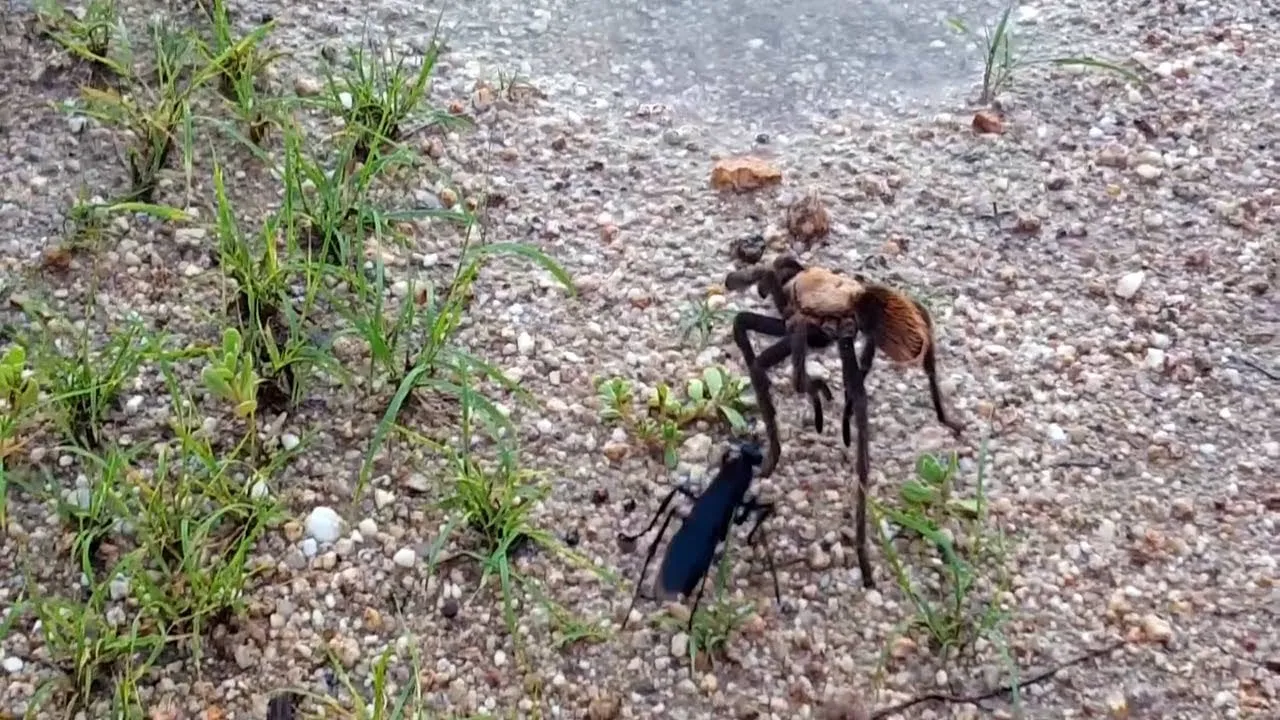
Tarantula Hawk Male vs Female Differences
The tarantula hawk, a formidable insect renowned for its painful sting and imposing size, presents an interesting challenge when it comes to distinguishing between males and females. While both sexes share the striking appearance of a black body and vibrant, rust-colored wings, subtle yet significant differences exist. Accurate sex identification is crucial not only for enthusiasts and researchers but also for understanding the species’ behavior, life cycle, and conservation needs. This guide provides a comprehensive overview of the key characteristics and behaviors that will help you differentiate between male and female tarantula hawks, ensuring a better appreciation for these fascinating creatures. We’ll explore visual cues, behavioral patterns, and even habitat preferences to equip you with the knowledge to identify the gender of these impressive wasps confidently.
Size and Appearance Differences in Tarantula Hawks
One of the primary distinctions between male and female tarantula hawks lies in their size and overall appearance. Generally, female tarantula hawks are noticeably larger than their male counterparts, a trait related to their role in hunting and provisioning for their offspring. The females must be large and strong enough to subdue and paralyze tarantulas, which serve as hosts for their larvae. This difference is often the first clue when observing these wasps. Females may reach up to 2 inches in length, while males tend to be slightly smaller. Beyond size, subtle variations in body structure can also offer clues. The stinger, which is only present in females, is a critical feature related to this. The overall build of the female is more robust, reflecting their hunting prowess and the need to carry a paralyzed tarantula to a burrow. The males, on the other hand, are built for flight and possess slightly different proportions, emphasizing their role in mating and territorial defense.
Male Tarantula Hawk Characteristics

Male tarantula hawks, while smaller than females, exhibit unique characteristics that help in their identification. These wasps are primarily concerned with finding a mate and defending their territory. They tend to have a more slender build than females. This is because males do not need to hunt or transport prey. Their primary focus is on locating and mating with females. Their behaviors often include patrolling specific areas, such as potential nesting sites or areas where females might be found. They display an active search for mating opportunities. The males are also less likely to be observed on the ground as they spend more time in flight, searching and guarding their territories. In some cases, males might exhibit territorial behavior, such as chasing other insects or wasps from their established area. Male tarantula hawks play a critical role in the species’ reproduction and are fascinating to observe with their specialized behaviors.
Female Tarantula Hawk Characteristics
Female tarantula hawks are easily distinguished by their size and robust build, which enables them to hunt and paralyze tarantulas. These wasps are equipped with a powerful sting that delivers venom, temporarily paralyzing the spiders. They use this as a hunting technique. Females exhibit a more deliberate and purposeful behavior. Their activities revolve around hunting, nest construction, and egg-laying. Females are often seen actively searching for tarantula burrows. They will also engage in digging their own burrows or modifying existing ones to house their eggs. This activity is typically conducted in the ground or in pre-existing cavities. A key aspect of their behavior is the ability to carry a paralyzed tarantula to their nest. This provides a food source for their larvae. The females’ focused and precise behaviors reflect their crucial role in the species’ survival, making them easily identifiable in their actions.
Behavioral Differences Between Male and Female Tarantula Hawks
Behavioral differences between male and female tarantula hawks are quite distinct, often providing valuable clues for identification. As previously mentioned, males primarily engage in patrolling territories and actively seeking mates. This behavior is a key factor for observing them. They fly constantly. They look for females. They are highly attuned to environmental cues that suggest the presence of potential mates. Females, on the other hand, exhibit behaviors directly related to their role in reproduction and survival. They are focused on hunting tarantulas. They transport them back to their nests. They lay their eggs on the paralyzed spiders. They engage in nest-building activities, often digging or modifying burrows. Their activities are focused on these crucial tasks, illustrating their distinct role in the species’ survival.
Mating Rituals and Behaviors

Mating behaviors offer another perspective. Male tarantula hawks employ specific strategies to attract and secure mates. They often establish territories. They actively patrol these areas. They aggressively defend them from other males. When a female is found, they will engage in courtship rituals. These rituals involve the male attempting to mate with the female. Once a female is ready to mate, the process can be observed, though it is often quick. It is essential to note that males can sometimes be observed attempting to mate with females that are already carrying a tarantula. This action is thought to be a desperate attempt to secure a mating opportunity before the female completes her provisioning. This behavior highlights the importance of mating for males and ensures the continuation of their genes. Observing the mating rituals will provide additional clues when identifying the sex of these insects.
Nesting and Egg-Laying
Nesting and egg-laying behaviors are almost exclusive to female tarantula hawks, providing yet another way to distinguish them from males. After mating and hunting a tarantula, the female will drag the paralyzed spider to a nest. They lay a single egg on the tarantula’s abdomen. This ensures that the hatched larva will have an immediate food source. Females dig burrows, or use existing ones, to safeguard their eggs and the paralyzed tarantula. The selection of these locations is critical. The nests are typically in the ground or in a protected cavity. The nest sites are designed to protect the developing larva from predators and environmental conditions. The presence of nest-building behavior, along with the associated transport of a tarantula, is a clear indicator of a female wasp. If you see a tarantula hawk dragging a spider, you can be certain it’s a female preparing for her offspring.
Identifying Tarantula Hawk Sex by Antennae
While size and behavior are often sufficient to determine the sex of a tarantula hawk, a closer examination of the antennae can provide additional confirmation. The antennae, which are sensory organs, can vary slightly in appearance between males and females. This is a valuable tool in identifying their sex. The antennae of male tarantula hawks are often longer and more robust than those of the females. This difference is thought to provide males with a greater ability to detect pheromones released by the females. This helps with locating mates. Conversely, females generally have slightly shorter and less elaborate antennae. This is because they are more focused on hunting and nest preparation. Observing these subtle variations, in combination with other identifying features, can increase the accuracy of sex determination.
How to Examine Antennae for Sex Determination

To examine the antennae effectively, you will need to have the wasp within close range, often requiring patience and careful observation. If you have a tarantula hawk in a confined space, such as a glass jar, you can use a magnifying glass. This will help you to see the details of the antennae clearly. If you are observing the wasp in its natural habitat, you will need to utilize binoculars or a camera with a good zoom lens. The key is to focus on the length and thickness of the antennae. The longer and thicker antennae, with more segments, will indicate a male. This is because males use the antennae to find their mates. The female antennae will be shorter and less elaborate. It’s important to combine this observation with other identifying characteristics, such as size and behavior. This will help to verify the sex of the wasp.
The Significance of Coloration in Sexing Tarantula Hawks
While coloration is not a primary means of differentiating the sexes in tarantula hawks, some subtle variations have been observed. Both males and females are typically characterized by their black bodies and rust-colored wings. This is how most people identify this wasp. However, some individuals may exhibit slight variations in the shade of the wings or the intensity of the black coloration. These variations are not always indicative of sex. They can often be linked to environmental conditions or genetic factors. However, these differences can sometimes be found when sexing a tarantula hawk. It is critical to use coloration as a secondary factor. You should also use the primary indicators such as size, behavior, and antennae structure. Relying solely on coloration to determine the sex of a tarantula hawk can be inaccurate.
Color Variations and Sex Determination
Color variations in tarantula hawks are often subtle and can be difficult to use for sex determination. The most common variation is in the intensity of the wing color, with some individuals having slightly darker or lighter shades of red. While this variation has been noted, it has not been consistently linked to a specific sex. Instead, it is often influenced by factors such as age, diet, and environmental conditions. Furthermore, the overall body coloration can appear black or have a slight iridescence. However, this is usually not related to the sex of the insect. The best practice is to use color variation as a supporting factor only after considering size, antennae structure, and behavioral patterns. It is a supplementary observation, not a definitive one.
Habitat and Geographical Distribution
The habitat and geographical distribution of tarantula hawks do not generally offer a definitive way to differentiate between males and females. However, the presence of both sexes can vary depending on their life cycle stages and the availability of resources. These wasps are commonly found in arid and semi-arid regions. They are most abundant in the southwestern United States and parts of Latin America. Males and females can be found throughout the same habitat. Their habitats are similar. In general, females will be most actively observed during the hunting and nesting seasons. Males are more likely to be present during mating periods. Understanding these behaviors will influence where you might find them.
Male and Female Habitat Preferences
While males and females share the same general habitat, their specific preferences can sometimes differ based on their activities. Males often establish territories in areas where they can easily spot potential mates. They frequently patrol areas, such as along trails or near flowering plants. These plants are often visited by insects. Females will prefer habitats where they can hunt tarantulas and prepare their nests. These are often in areas with abundant vegetation, loose soil, and a high likelihood of tarantula presence. These differences in behavior and habitat preferences will help you differentiate between the males and females of this species. This shows how the differences between males and females can affect their distribution. The different sexes will be present at different times of the season and in different areas.
Why Accurate Sex Identification Matters
Accurate sex identification of tarantula hawks is essential for several reasons, including research, conservation, and understanding the overall biology of the species. Scientists use this identification for different studies. These include studies on behavior, population dynamics, and evolutionary biology. Differentiating between the sexes helps with the understanding of mating systems, the role of each sex in the species’ lifecycle, and their ecological impact. Additionally, accurate sex identification is vital for conservation efforts. Researchers can better assess population health. They can determine if the population is declining. They can also understand any factors affecting their reproduction. Ultimately, knowing the difference between a male and a female tarantula hawk is critical for the long-term survival of this species and our ability to understand its place within its ecosystem. Accurate identification helps with the development of conservation strategies.
Impact on Research and Conservation

The ability to accurately sex tarantula hawks has a significant impact on both scientific research and conservation efforts. By distinguishing between males and females, researchers gain deeper insights into the species’ behavior, life cycle, and ecological role. This knowledge informs management plans. This enables us to create targeted conservation strategies. Furthermore, this ability enables scientists to understand population dynamics and reproductive success. This is important for making decisions related to habitat preservation and species management. By understanding the differences, we can protect these remarkable insects. Accurate identification is an essential tool for ensuring the long-term health and sustainability of tarantula hawk populations.