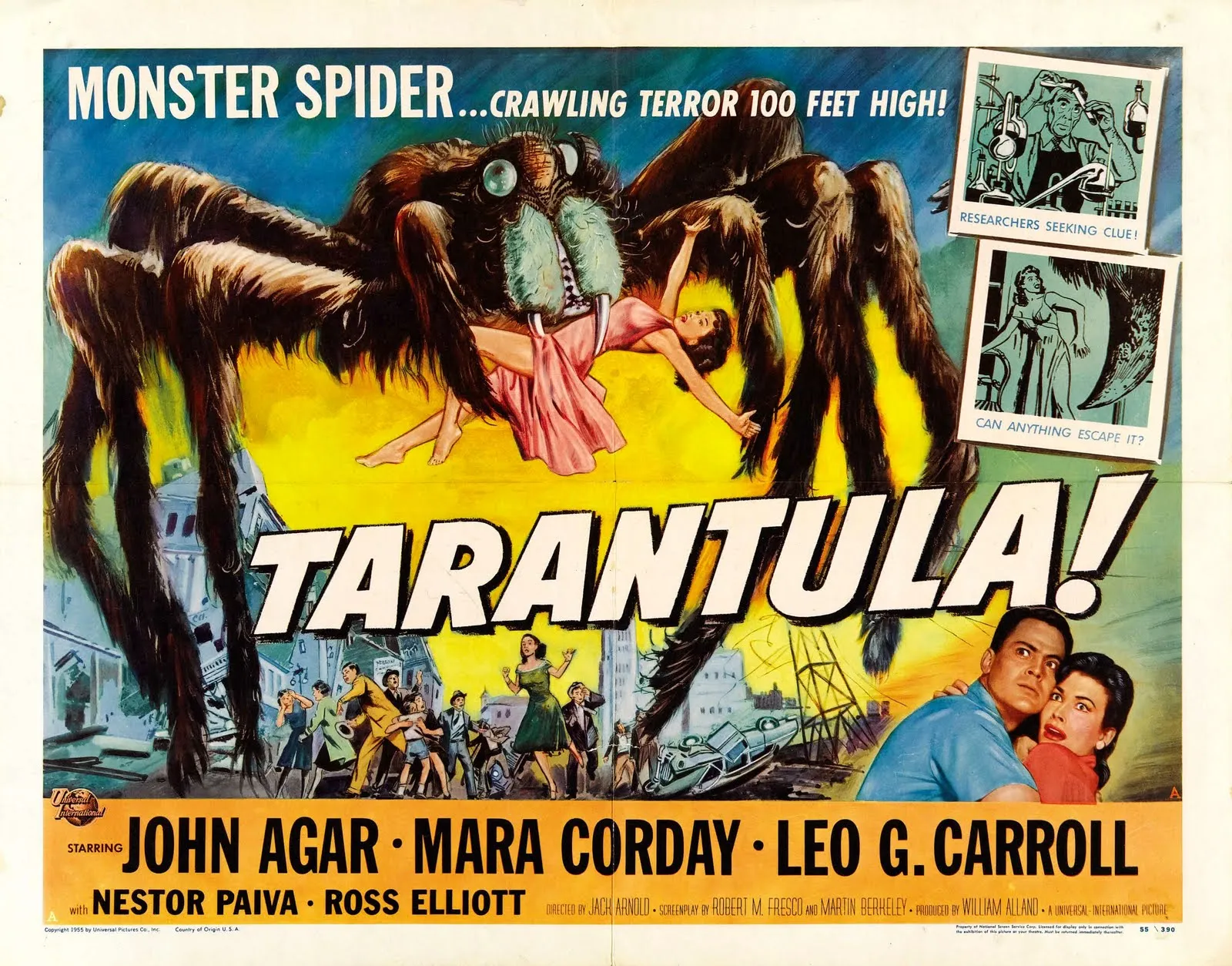
The Allure of Tarantula 1950s Movie
The 1955 film Tarantula! remains a captivating piece of cinema, drawing audiences into a world of giant spiders and Cold War anxieties. This classic monster movie, a product of the Atomic Age, not only terrified viewers with its oversized arachnid but also tapped into deeper societal fears about scientific hubris and the unknown. Its enduring appeal lies in its ability to blend suspense, science fiction, and horror into a thrilling experience. The movie’s black-and-white cinematography, combined with its creature design and practical effects, creates a palpable sense of dread that still resonates with audiences today. Tarantula! is more than just a monster movie; it’s a reflection of its time and a significant contribution to the genre.
The Giant Spider’s Origin
The monstrous tarantula in the film originates from a scientific experiment gone horribly wrong. A scientist, attempting to create a growth serum to increase food production, accidentally creates a giant, man-eating spider. This premise cleverly plays on the anxieties of the era, highlighting the potential dangers of unchecked scientific advancement. The spider’s growth is fueled by the serum, which allows it to rapidly increase in size and strength. The movie carefully establishes the spider’s origin and its escalating threat, building suspense as the creature escapes and begins its rampage. This origin story, deeply rooted in scientific exploration and its unforeseen consequences, continues to fascinate viewers, making it a timeless horror element.
The Atomic Age Influence

The film’s creation during the 1950s, a period marked by the Cold War and the fear of nuclear weapons, deeply influenced Tarantula!. The atomic age fueled a collective anxiety about the destructive potential of scientific advancements. The giant tarantula symbolizes these fears, representing the uncontrollable consequences of scientific experiments gone awry. The film’s narrative reflects the era’s pervasive paranoia about unseen threats and the potential for catastrophe. The tarantula’s growth and destructive behavior parallel the potential devastation of atomic weaponry. This mirroring of societal anxieties provides a rich context for the film, which enhances its impact and makes it a historical artifact, offering insight into the fears and preoccupations of the 1950s.
The Special Effects Marvels
Tarantula! is noteworthy for its pioneering use of special effects, considering the technological limitations of the time. The visual depiction of the giant spider was achieved using a combination of techniques, including forced perspective, matte paintings, and clever camera angles. These effects, while rudimentary by modern standards, were highly effective in creating a sense of scale and terror. The scenes of the tarantula rampaging through the town, filmed with miniatures and superimposed elements, were particularly impressive. The movie’s special effects team masterfully crafted a believable, albeit terrifying, monster, which enhanced the film’s suspense and contributed significantly to its success. The innovative use of these effects not only thrilled audiences but also paved the way for future monster movies.
The Cast and Their Performances
The cast of Tarantula! contributed significantly to the film’s success. John Agar, as the heroic Dr. Matt Hastings, delivered a compelling performance, portraying both intelligence and bravery. Mara Corday, as the female lead, added to the suspense. Leo G. Carroll, known for his role in North by Northwest, provided a sense of authority and intrigue. The actors effectively conveyed the emotions of fear, suspense, and determination, which engaged the audience. The movie also features a young Clint Eastwood in a small, uncredited role, which adds a layer of interest for film enthusiasts. The cast’s performance enhanced the film’s atmosphere, making it a classic of its genre.
Impact and Legacy of Tarantula

Tarantula! had a profound impact on the monster movie genre. It popularized the concept of oversized creatures and the dangers of unchecked scientific experimentation, themes which many subsequent films have explored. The film’s success helped establish the conventions of the genre, influencing both the narrative structure and the visual style of future monster movies. Its influence can be seen in films such as Them! and Attack of the 50 Foot Woman. Furthermore, the film’s themes of fear and scientific hubris continue to resonate with audiences, making it a timeless classic. Tarantula! not only entertained audiences but also provided social commentary, contributing to the cultural dialogue surrounding science and technology.
Influence on Future Monster Movies
The influence of Tarantula! on the monster movie genre is undeniable. The film set a precedent for the creation and portrayal of giant creatures. Its narrative structure, where the threat gradually unfolds and the heroes struggle to contain it, became a common template for many subsequent films. The visual style, particularly the use of forced perspective and practical effects, served as inspiration for other filmmakers. The film’s success validated the monster movie formula, inspiring other productions with similar themes of giant creatures and the dangers of scientific experimentation. Tarantula! helped cement the monster movie as a distinct genre, with its own set of tropes and conventions.
Critical Acclaim and Audience Reception
Tarantula! received positive reviews upon its release and continues to be praised by critics and fans alike. Critics have lauded the film’s suspenseful atmosphere, innovative special effects, and its reflection of Cold War anxieties. The movie’s ability to blend horror and science fiction has also been recognized, making it a standout film within its genre. Audience reception was also favorable, and the film was a box-office success. Its enduring popularity is demonstrated by its frequent showings on television and its availability in multiple home video formats. Tarantula!’s critical and audience reception solidified its status as a classic, a film which resonates with viewers generations after its original release.