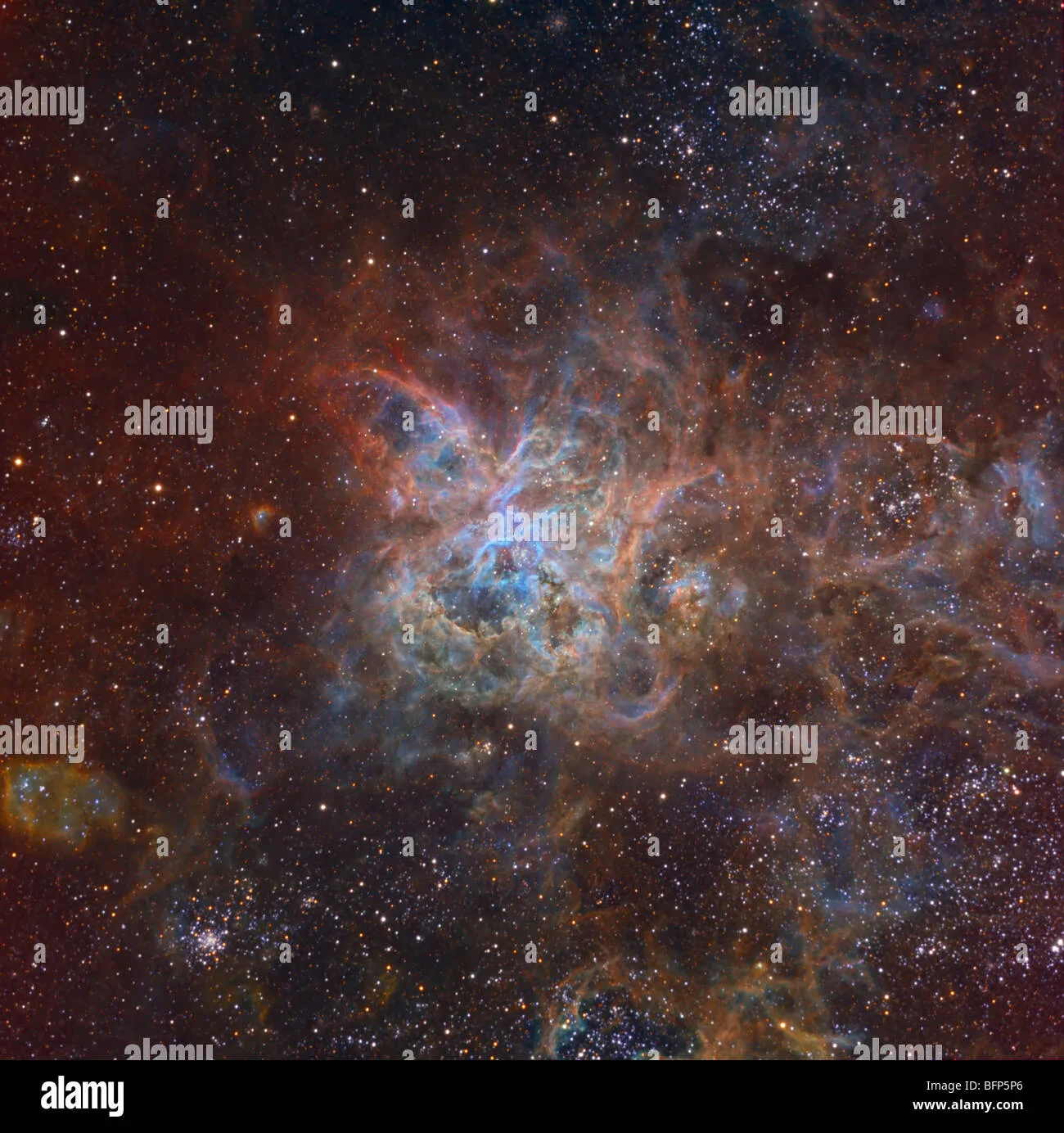
What is the Tarantula Nebula (NGC 2070)
The Tarantula Nebula, also known as NGC 2070, is a vast and intricate emission nebula located in the Large Magellanic Cloud (LMC), a satellite galaxy of the Milky Way. This stunning celestial object is one of the most active star-forming regions in the Local Group of galaxies, making it a focal point for astronomers studying stellar evolution. Its immense size and brilliant luminosity, fueled by intense star formation, create a breathtaking spectacle visible through telescopes and even to the naked eye under ideal conditions. Understanding the Tarantula Nebula provides invaluable insights into the processes of star birth, the life cycle of massive stars, and the evolution of galaxies. The name “Tarantula” is derived from its spider-like appearance in early telescopic images.
Location and Discovery of NGC 2070
NGC 2070 resides within the Large Magellanic Cloud, approximately 160,000 light-years away from Earth. The LMC is visible from the Southern Hemisphere, making the Tarantula Nebula a prominent feature in the night sky for observers in that region. The nebula was first cataloged by Nicolas-Louis de Lacaille in 1751 and later included in the New General Catalogue (NGC) as NGC 2070. Its discovery marked a significant step in astronomical history, providing a closer look at stellar nurseries and the dynamic processes within galaxies beyond our own.
Finding the Tarantula Nebula in the Night Sky

To locate the Tarantula Nebula, start by identifying the Large Magellanic Cloud. Look for a hazy, irregular patch in the constellation Dorado. The nebula is easily visible within this cloud, even with the naked eye under dark skies. Using binoculars or a small telescope significantly enhances the view, revealing intricate details within the nebula. Astrophotography enthusiasts can capture stunning images of NGC 2070, showcasing its vibrant colors and complex structures. The Tarantula Nebula’s visibility makes it a popular target for both amateur and professional astronomers, providing opportunities for observation and study.
Key Features of the Tarantula Nebula
The Tarantula Nebula is characterized by its immense size and the presence of numerous young, massive stars. Its structure is a complex arrangement of ionized hydrogen gas, dust lanes, and bright clusters of stars. This nebula stands out due to its extreme activity, including ongoing star formation processes and the presence of powerful stellar winds from its central stars. The energetic radiation and stellar winds sculpt the nebula’s appearance, creating intricate patterns and shapes that make it a fascinating object for observation. The nebula’s features reflect the dynamic interplay between star formation, stellar evolution, and the interstellar medium.
The Size and Distance of NGC 2070
The Tarantula Nebula spans an impressive 1,000 light-years across, making it one of the largest star-forming regions known in the Local Group. Its vast size is a testament to the immense scale of star formation occurring within it. The nebula’s distance of approximately 160,000 light-years from Earth allows astronomers to study its features in great detail. This distance helps scientists analyze the nebula’s physical properties, including temperature, density, and the composition of its gases and dust. Studying the size and distance provides crucial context for understanding the nebula’s structure and evolution.
Stars and Clusters within the Nebula

The Tarantula Nebula is home to a wealth of young stars and star clusters, including the prominent cluster known as R136. R136 is a dense concentration of massive, hot stars that provide much of the energy that lights up the nebula. These stars are among the most massive and luminous known, representing an extreme example of stellar evolution. The presence of R136 and other star clusters within the nebula indicates ongoing star formation processes and contributes significantly to the nebula’s radiant glow. The study of these stars and clusters helps scientists understand how massive stars form, evolve, and influence their surroundings.
The Energetic Stars and their Impact
The energetic stars within the Tarantula Nebula have a profound impact on the surrounding environment. They emit intense radiation and powerful stellar winds, which shape the nebula’s structure and trigger further star formation. The winds compress the surrounding gas and dust, leading to the formation of new stars. The energy from these stars also ionizes the gas within the nebula, causing it to glow brightly in various colors. The energetic stars also contribute to the overall chemical enrichment of the interstellar medium. Their impact extends beyond the immediate vicinity of the nebula, influencing the evolution of the Large Magellanic Cloud itself.
Formation and Evolution of the Tarantula Nebula
The formation and evolution of the Tarantula Nebula are driven by the complex interplay of gravity, gas, and dust. The process begins with the gravitational collapse of molecular clouds, leading to the formation of massive stars. These stars, in turn, emit intense radiation and stellar winds, which sculpt the nebula and trigger further star formation. The nebula’s evolution is also influenced by the presence of supernova remnants, which inject energy and heavy elements into the surrounding interstellar medium. Understanding the life cycle of the Tarantula Nebula provides valuable insights into the processes that govern star formation and the evolution of galaxies.
Star Formation Processes in NGC 2070

Star formation within NGC 2070 is a dynamic process that involves the collapse of dense regions of gas and dust. These regions, called molecular clouds, become unstable due to gravity, causing them to collapse and form protostars. As the protostars gain mass, they ignite nuclear fusion, marking the birth of new stars. The intense radiation and stellar winds from these young stars then shape the surrounding environment, creating complex structures and triggering further star formation. The study of these processes helps astronomers understand how stars form and evolve within nebulae and galaxies.
The Role of Supernova Remnants
Supernova remnants, the expanding shells of gas and dust from exploded stars, play a significant role in the evolution of the Tarantula Nebula. These remnants inject energy and heavy elements into the interstellar medium, enriching it and influencing star formation. The shock waves from supernovae can compress the surrounding gas, triggering the formation of new stars. Supernova remnants also provide scientists with opportunities to study the late stages of stellar evolution and the processes that lead to the formation of heavy elements. The presence of supernova remnants in the Tarantula Nebula adds complexity to its structure and contributes to its dynamic nature.
Exploring the Tarantula Nebula with Telescopes
Observing the Tarantula Nebula requires the use of telescopes due to its distance and subtle details. Various types of telescopes, ranging from small backyard instruments to large professional observatories, can be used to study NGC 2070. The choice of telescope depends on the level of detail desired, the type of observations planned, and the location of the observer. Modern telescopes equipped with advanced imaging systems can capture stunning images of the nebula, revealing its intricate structures and vibrant colors. Telescopes are essential for unraveling the secrets of the Tarantula Nebula and gaining insights into star formation and galaxy evolution.
Choosing the Right Telescope

When choosing a telescope for observing the Tarantula Nebula, consider factors such as aperture, focal length, and type (refractor, reflector, or catadioptric). A larger aperture allows you to gather more light, revealing fainter details within the nebula. A longer focal length provides higher magnification, which is beneficial for observing the intricate structures. The choice of telescope also depends on your budget and observing experience. For astrophotography, a telescope with a computerized mount and accurate tracking capabilities is crucial. Experimenting with different types of telescopes will help you to determine which best suits your observing needs and interests.
Imaging Techniques for Astrophotography
Astrophotography of the Tarantula Nebula involves capturing detailed images using specialized equipment and techniques. Essential equipment includes a telescope, a camera (typically a CCD or CMOS camera), a mount, and filters. Common techniques involve long-exposure imaging, which allows for the collection of faint light from the nebula. Using narrowband filters can enhance the visibility of specific elements, such as hydrogen-alpha (Hα), oxygen-III (OIII), and sulfur-II (SII), which contribute to the nebula’s colors. Processing the images using software allows you to enhance details and reveal the nebula’s intricate structures. Astrophotography requires patience and practice, but the resulting images can provide a stunning view of this cosmic wonder.
Future Research and Exploration
Future research on the Tarantula Nebula will continue to focus on understanding the processes of star formation, stellar evolution, and the impact of massive stars on their surroundings. Scientists will use advanced telescopes and imaging techniques to study the nebula in greater detail, including observations in different wavelengths of light. The James Webb Space Telescope (JWST), with its high-resolution infrared capabilities, will provide unprecedented views of the nebula, allowing astronomers to peer through the dust and gas to study the earliest stages of star formation. Future explorations will help us refine our understanding of this remarkable celestial object and its role in the evolution of the universe.
The Importance of NGC 2070 for Astronomy

The Tarantula Nebula is of immense importance to astronomy because it provides a unique opportunity to study star formation, stellar evolution, and the interplay between stars and the interstellar medium. It serves as a cosmic laboratory for investigating the processes that govern the birth, life, and death of massive stars. The nebula also provides a window into the evolution of galaxies, as it allows scientists to study the effects of star formation on the surrounding environment. Studying NGC 2070 contributes significantly to our understanding of the universe and our place within it.